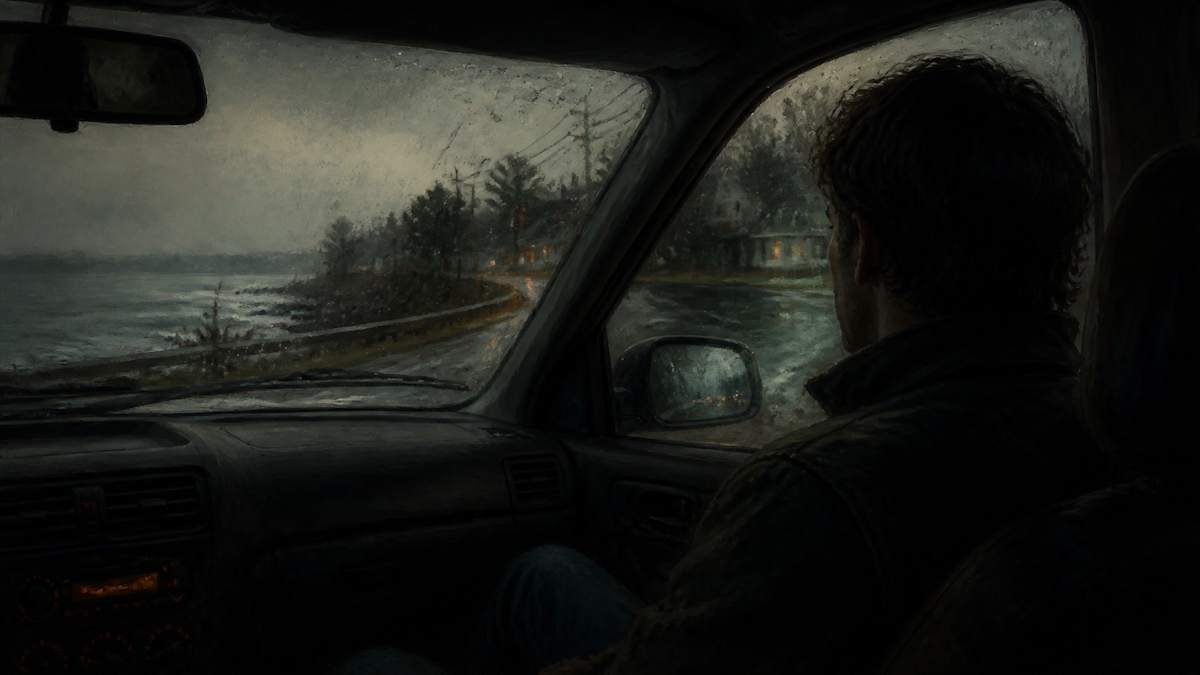
It is an ordinary Saturday in Rhode Island. I am sitting in the passenger seat of the car while Ana drives. We are going to get coffee. On the outside, everything looks fine. It is a quiet morning. The world is moving at its usual pace. I am just a guy in a car with his wife.
Inside, it is different. Inside, there is the familiar weight. It is the weight of health stuff. It is the weight of future stuff. It is the constant, low-level hum of wondering if I am becoming a burden. I sit there and I try to enjoy the coffee. I try to be present. But I am also wondering if I am allowed to admit that I am tired.
This is what men’s health often looks like. It is not always a dramatic collapse. Sometimes it is just a regular Saturday where you are finally admitting to yourself that you are not doing as okay as you have been acting.
The habit of pushing through
June is Men’s Health Month. Usually, this is when we talk about heart disease or prostate exams. Those things matter. But there is a quieter part of men’s health that we rarely touch. It is the mental and spiritual side. It is the part that stays hidden behind the "I am fine" response.
I learned the hard way that ignoring your body and your mind does not make you strong. It just makes you quieter while things get worse.
Before I was an author, I was an EMT. I was in school. I was building a future. Like a lot of men, I was used to pushing through. You keep going. You do not want to be dramatic. You do not want to be a burden. You do not want people looking at you like you are weak.
In the medical world, you see a lot of people at their breaking points. You learn to compartmentalize. You learn to stay steady while everything else is falling apart. But eventually, the thing that falls apart is you.
When illness forced me to stop everything, I realized how many men are walking around bleeding internally. They are bleeding physically. They are bleeding emotionally. They are bleeding spiritually. And they are still saying, "I am fine."

The silence that does not heal
The conversation we need to have this month is not just about going to the doctor. It is about the room men need to tell the truth before they hit a breaking point. We need to talk about depression. We need to talk about fear. We need to talk about the shame of not being who you thought you were supposed to become.
Silence does not heal men. It just trains them to suffer alone.
I'm seeing this a lot in the reviews of readers who find my work. They are often people who are tired of the clichés. They are tired of the easy answers that do not actually fix the internal bleeding. They are looking for something that honors the complexity of their pain.
Elias and the weight of being seen
When I wrote Elias Wynn: The Witness, I was writing about a man who carries what I think many men carry. Elias is dealing with pressure and shame. He is sick. But more than that, he is emotionally trapped.
He feels like his body has betrayed him. He feels like his future is being taken away. Instead of being able to grieve that, he starts feeling guilty. He feels guilty for needing help. He feels guilty for being weak. He feels guilty for not being the person he thinks everyone needs him to be.
That speaks to a very real male struggle. A lot of men are not just afraid of pain. They are afraid of what pain makes them look like.

Elias keeps trying to survive without fully admitting how scared he is. He does not always have the language for what is happening inside him. He tries to endure it. He tries to manage it. He tries to rationalize it. I think a lot of guys know exactly what that feels like.
There is something painful about a man who is drowning but still trying not to inconvenience anybody with the sound of it.
That is where Elias becomes more than just a character in a story about supernatural horror. He becomes a reflection of the quiet horror a lot of men live with. It is the belief that needing help makes you less worthy of love.
Not a self-help book
I want to be clear about something. Elias Wynn is not a self-help book. It does not have a five-step solution for your mental health. It does not have a clean message wrapped in a thriller.
The "help" of the book is not that it gives you a solution. The help is that it gives language to things people often suffer through silently.
Sometimes fiction helps because it does not lecture you. It sits beside you. It lets you see yourself in someone else’s fear. It lets you see yourself in someone else’s confusion.
I have written before about why the Bible is not sanitized and why our stories should not be either. Real life is messy. Real suffering does not come with easy answers.

If you have ever felt like something was wrong with you, or like your pain made you less worthy, this story may meet you there. It asks a question that matters. What kind of healing actually loves you? And what kind of healing only wants to possess you?

The honesty we need
We need more honesty. Not the performative kind. Just the regular kind. The kind that shows up on a Saturday morning over coffee.
Men’s health is about more than just surviving. It is about being whole. It is about realizing that your worth is not tied to your utility. You are not just a machine that exists to provide and protect until you break.
You are allowed to be human. You are allowed to be tired. You are allowed to admit that the water is getting high and you are having a hard time staying afloat.
If you are reading this and you feel like you are drowning quietly, know that you are not the only one. The stories we tell matter because they remind us that we are seen. Even in the dark. Even on an ordinary Saturday .
Stay with the light.