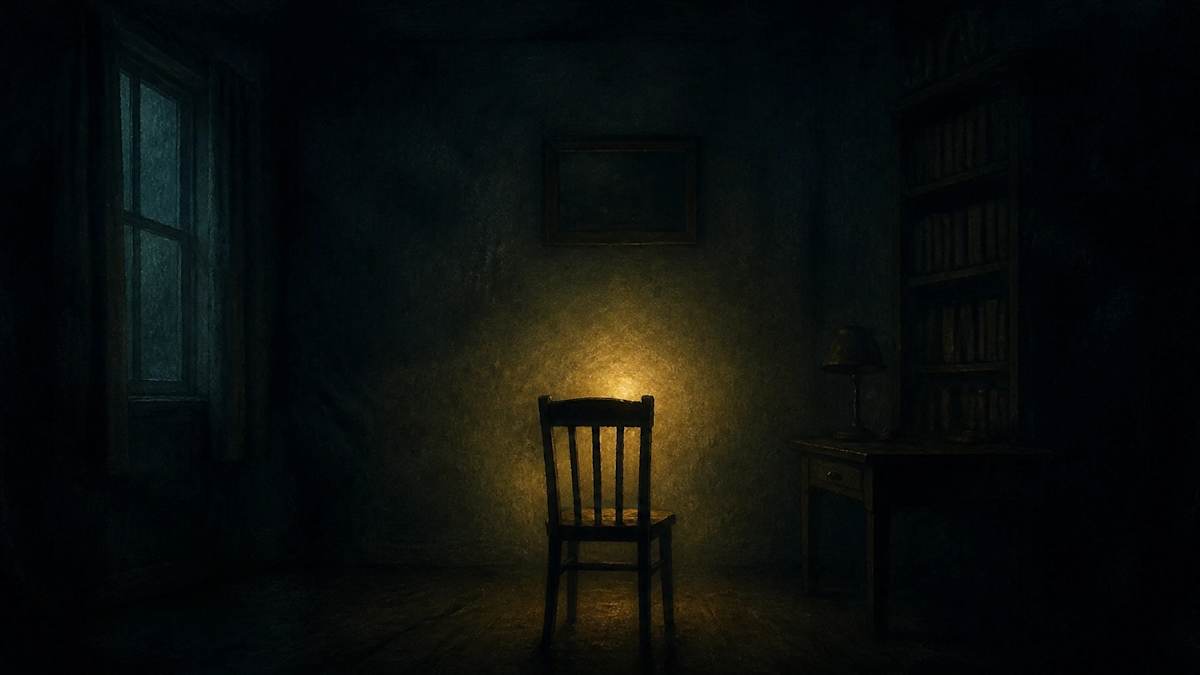
We have been talking about some heavy things lately. Prosperity gospels. Men’s mental health. The way silence feels like drowning.
It is easy to get stuck in the dark when you write about trauma and faith. When you write novels about trauma and healing, you spend a lot of time in the shadows. You have to. If you don't look at the shadows, the light you find at the end feels like a lie.
In my debut novel, Elias Wynn: The Witness, there is a lot of shadow. There is a character called the Healer who offers a way out. But his version of healing comes with a leash.
Lately, I’ve been thinking about the counter-argument to that leash.
I call it The Warmth.
It is hard to explain without sounding like a Hallmark card. And I hate Hallmark cards. They are too clean. They are too sanitized for the kind of world we actually live in lol.
The Warmth is different.
The Leash and the Presence
In Elias’s world, the Healer comes with spectacle. He comes with power. He comes with an offer.
He gives Elias something he desperately wants. But there is a cost underneath it. There is ownership. It is a transaction. "I healed you, so now you owe me."
That is not love. That is a debt.
The Warmth doesn’t force itself into the room. It doesn’t perform. It doesn’t demand that Elias prove his worthiness or his gratitude. It doesn't say a word about what he owes.
It just stays.
That is the best way I can describe it.
It is the presence that doesn’t leave when the miracle doesn’t happen. It is the quiet mercy that doesn’t shame him for still being afraid. It isn't a "look at me" kind of light. It is more like the small holy thing that keeps him from completely disappearing into the dark.

Hope with Blood on its Sleeve
I don't want hope in my writing to feel pretty.
Elias’s hope is not clean. It is heavy. It is wounded. It is the kind of hope that still has blood on its sleeve.
Real hope is not always optimism. Sometimes optimism is just a way to avoid looking at the truth.
Sometimes hope is just not letting go of the light even when you don’t feel warm yet.
Sometimes it is breathing one more time.
Sometimes it is letting someone sit beside you when every instinct you have is telling you to isolate.
Sometimes it is telling the truth instead of pretending you are fine.
Sometimes it is still saying “God, stay with me” when you don’t even have the strength to say “God, fix me.”
That is what makes it feel real to me. This is what spiritual healing books often miss. They want the "after" photo. They want the testimony. They don't want the messy middle where the person is still shaking.
A Hand in the Back of the Ambulance
I saw versions of this when I was working as an EMT.
It wasn't always some big miraculous moment where everything suddenly turned around. A lot of times, the situation was still scary. The person was still sick. The family was still afraid. The outcome was still uncertain.
But something shifted in the room when someone stopped trying to control the moment and just became present.
A hand being held.
A calm voice.
Someone being told, “I’m right here.”
A patient realizing they weren’t alone in the worst few minutes of their life.
It doesn't sound dramatic. It doesn't make for a good action movie scene. But when you are in that kind of moment, presence is everything. It doesn’t erase the suffering. It just changes the loneliness inside the suffering.
That is what The Warmth feels like.
It is not a shortcut out of pain. It is not a contract. It is not "do this and God will give you the life you wanted."
It is: “You are still loved here. Even here. Even like this.”

Love Does Not Need Leverage
There is a massive difference between love and ownership.
Ownership says, “I helped you, so now you belong to me.”
Love says, “You were already worth staying for before you could give anything back.”
Ownership uses healing as leverage.
Love doesn’t need leverage.
Ownership makes you perform gratitude.
Love lets you breathe.
In faith and doubt in fiction, we often see characters "bought" by their miracles. They become tools for the one who saved them.
Elias’s deepest wound is not just that he is sick. It is that his life has trained him to believe love comes with conditions. That if someone helps him, he owes them. If he survives, he owes a debt. If he receives a gift, there must be a hook in it somewhere.
The Warmth pushes against that.
It is the first thing in his life that does not try to own him. It does not erase all the pain. It does not make everything simple. It does not turn his trauma into a neat story.
But it tells a truth the darkness can’t: Elias is not a debt. He is not a failed miracle. He is not something to be possessed.
He is loved.
And real love does not need to put a leash on the person it saves.
Looking Ahead: Spanish and Sound
On the practical side, I am in a weird but exciting season.
The book is growing into new forms.
The Spanish translation is finished. Right now, I am working through the idioms and the specific wording. I don't want it to sound like a stiff translation. I want it to feel natural across Latin America. Spanish has so many regional flavors. I don't want the book to feel like it got dragged through Google Translate and came out wearing a suit.
I am hoping to release the Spanish edition in a week or two. I am taking the extra time to make sure it sounds right. Because the voice matters.

Then there is the dramatized audiobook.
Part One is almost out. I want to give a disclaimer for this one. Nobody opens Elias Wynn: The Witness expecting a picnic. It is intense.
But the dramatized audiobook brings the story to life in a way that is much more immersive. It is not "darker" just to be dark. It is just closer to the way I pictured the scenes while I was writing them. The atmosphere. The tension. The silence between things.
If you are sensitive to sensory-heavy content, be aware. This version has effects, music, and a multicast performance. Some moments might feel more triggering because you aren't just reading it. You are hearing it breathe.
I am incredibly grateful to the people helping me bring this to life. Isaiah Grace, William Commerford, Andres Guzman, and my wife, Ana. They are voicing some of the bigger characters in the book. It means a lot to have people close to me involved in something that came from such a personal place.

We are still in the thick of it. The book is out there, but it is still becoming.
Thank you for staying with me.
Stay with the light.
( Sebastian)