The dramatized audiobook is definitely not just “someone reading the book out loud.”
I didn’t want that. Most authors do one narrator. They hire a professional voice to read the sentences from start to finish. It’s clean. It’s standard. But for Elias Wynn: The Witness, it felt like it wasn’t enough. This story is already so atmospheric on the page. It’s built on things that are felt rather than just seen.
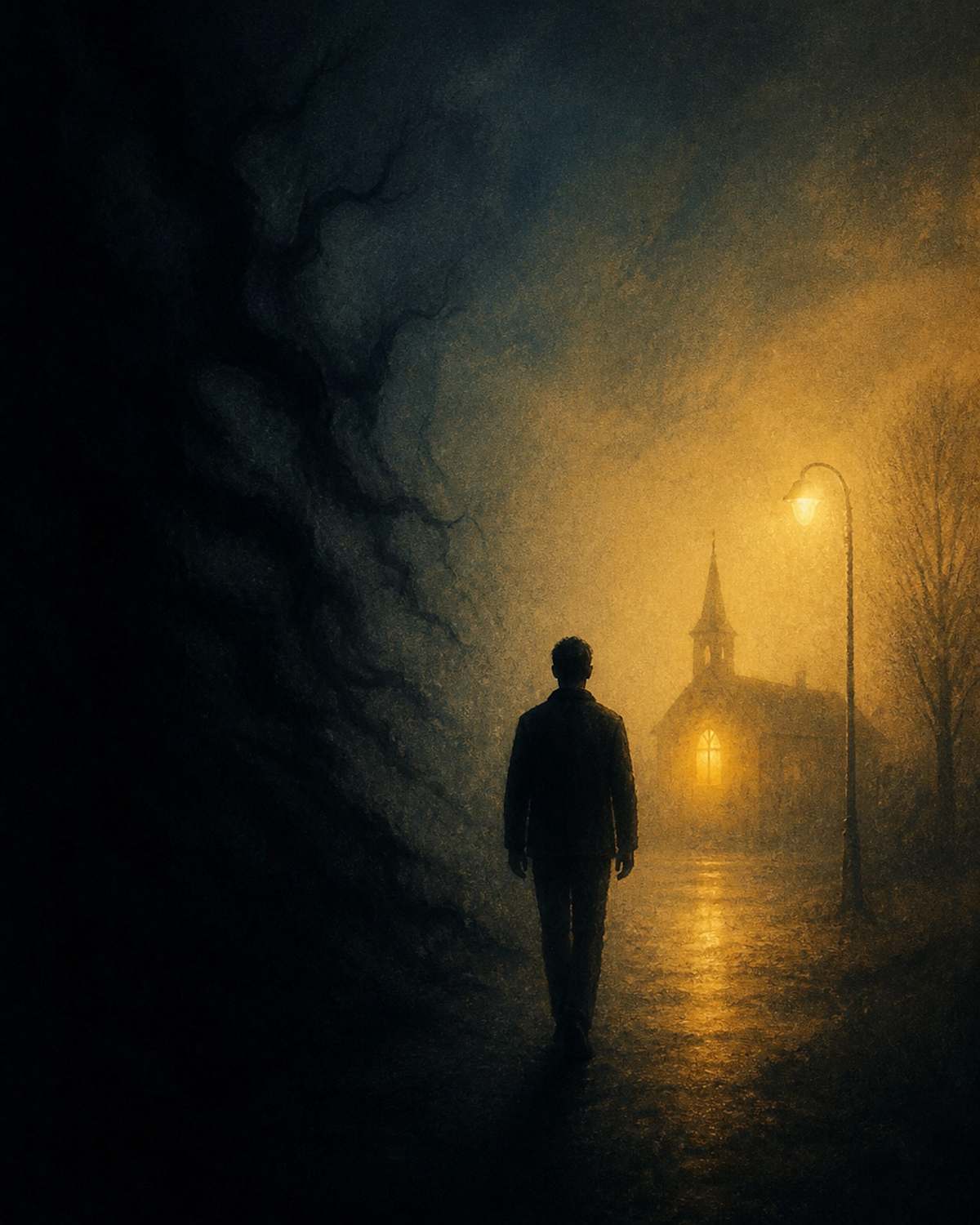
I wanted it to feel more like a movie for your ears. Not in a cheesy way. Not with over-the-top explosions or cinematic clichés. I wanted it to feel like you are inside the room with Elias. I wanted you to hear what he hears. I wanted you to feel the weight of what he doesn’t hear.
The Texture of the Unseen
Sound design lets me bring out things that words can only suggest. In the world of the novel, the dark isn't just an absence of light. It has a texture. It has a weight. It can feel invasive.
When the Healer is on the screen, or when the darker moments of spiritual pressure start to close in, I wanted the sound to reflect that. It should feel like something is pressing in on the listener. Like relief itself has teeth. It is meant to be uncomfortable because manipulation is uncomfortable.
But then there is the Warmth.
The Warmth has to feel different. It shouldn’t be loud. It shouldn't try to impress you or manipulate you into feeling something. It is a presence. It is a steady thing in the room that doesn’t need to prove itself. In the audio, this is a subtle shift. It’s the difference between a noise that demands your attention and a presence that lets you breathe.
That contrast matters. The book is heavily focused on the difference between love and ownership. The wrong kind of miracle feels like a leash. The Warmth feels like freedom. If I can make you feel that difference through your headphones before you even have language for it, then the audio version is doing its job.

A Real Warning for the Intense
I need to be honest here. The book is already rated R. No one opening Elias Wynn: The Witness should expect a picnic. But the dramatized audiobook brings the intensity much closer. The whole point of making it a movie for your ears is that it doesn't stay at a safe distance.
It isn't darker just to be edgy. It’s just more alive. The same scenes hit differently when you’re hearing the breathing. When you hear the music and the sound effects. When you hear the characters actually speaking to each other.
On a printed page, you control the pace. You can pause. You can skim the parts that make you flinch. You can take a breath. In audio, the scene moves toward you.
This version can be powerful, but it can also be triggering. If you are sensitive to sensory-heavy content, medical trauma, spiritual horror, or emotionally heavy scenes, please know that up front. I don’t want anyone going into this thinking it’s a cozy little listen and then getting spiritually drop-kicked in the dark.
The goal is immersion. But immersion can be heavy.
The Power of Silence

Silence is probably one of the biggest tools we have in this production.
I don’t want the whole thing to be loud. Loud horror is easy. It’s a jump scare. It’s a cheap trick. The scary part of Elias’s life is that a lot of his suffering happens in quiet rooms.
Quiet hospital rooms. Quiet bedrooms. Quiet moments where everyone else is moving on and he is sitting there feeling like something is fundamentally wrong with him. We used silence to capture that isolation.
Sometimes the silence in the recording says, “No one is coming.”
Sometimes it says, “You’re alone with this.”
Sometimes it says, “Something is here, but it hasn’t revealed itself yet.”
But there is another kind of silence. When the Warmth is involved, the silence becomes gentle instead of threatening. That is a hard thing to capture in audio. The same quiet can either feel like abandonment or presence depending on what is in it. We spent a lot of time trying to get that right.
A Personal Cast and the Tools Behind It
Working with people close to me makes this project even more personal. This story came from a very private place, so having my family and friends involved feels right.
Isaiah Grace lent his voice to a private investigator. My brother, Andres Guzman, is voicing Gilbert, who is Elias’s best friend. My wife, Ana, is voicing Lydia. And one of my old friends, William Commerford, is voicing Pastor Peter.
It is a wild experience to write a character in your head for years and then hear someone you love give that character breath. There are moments in the booth where a line lands a certain way and I just know: that’s it. That’s the voice I heard in my head. Sometimes they do something slightly different than I imagined, and it works better because it makes the character feel more human.
For the rest of the cast, I’m using ElevenLabs. I’m not a big studio. I don’t have a five-thousand-dollar-per-actor budget. I’m using the tools available to me to bring the vision to life. ElevenLabs gives me the freedom to shape the lines and the delivery without being locked into a specific ecosystem like Audible’s AI voices. I wanted to keep the rights to the performance so I could distribute it the way I wanted.
Breaking It Down: Part One and Part Two
This project has been exhausting. Between the Spanish translation and the general work of being an author, the audiobook production is a lot to carry. I originally wanted it out sooner, but the complexity of the distribution and the sheer size of the book made that impossible.
I’ve decided to break the dramatized audiobook into two parts.
Part One will cover the first two acts.
Part Two will cover Act Three.
Act Three is basically the rest of the book and almost half of the story. It’s where everything pays off. By breaking it up, I don’t have to rush the production. I can keep the quality high without burning out completely. It also builds suspense in a natural way.
How to Listen
If you’re going to dive into this, I have a recommendation.
Don't listen to it on your car speakers while you're half-distracted by traffic. Use headphones. Wait for a late night when the house is quiet. If it’s raining outside, even better.
Sit with it. Let the room change.
But also, know yourself. If you don't do well with intense audio, listen during the day. Read the physical book first if you need to. I’m not trying to traumatize anybody for the sake of art. I just want to tell an honest story.
I’m tired. Honestly, I’m very tired. It’s a lot to do as one person. But I’m still pushing because I believe in what this story is saying. I believe in the difference between being owned and being loved.
I hope you feel that difference when you put the headphones on.
Elias Wynn: The Witness is available now in Kindle, Paperback, and Hardcover. The dramatized audiobook Part One is coming soon. You can find more details and follow the progress at sebastianaguzman.com.
Listener Disclaimer
This dramatized audiobook is intended for mature audiences. While Elias Wynn: The Witness is already dark and intense on the page, this audio edition uses voice acting, music, sound effects, atmosphere, and silence to create a more immersive experience. Listeners should be aware that this version contains potentially triggering material, including traumatic fires, medical distress, emotional trauma, grief, spiritual oppression, disturbing supernatural moments, and intense psychological pressure. These elements are not included to romanticize darkness or glorify evil. They are used to show what Elias is facing—and to reveal how the light survives it. Please listen with care, especially if you are sensitive to sensory-heavy audio, spiritual horror, trauma, or intense emotional material.