Father’s Day was this past Sunday, and I didn’t get to post anything.
I’ll be honest, I almost let it pass. Not because I don’t care, but because sometimes these things sneak up on you. Then I remembered June is Men’s Health Month too, and it made me think about how we usually only talk about men’s health when it is officially “the month” for it, or when something bad happens.
That is kind of the problem.
A lot of guys are not walking around looking for a lecture. Most men do not want to feel judged, weak, dramatic, or like someone is trying to diagnose their whole life from the outside.
But during Men’s Health Month, maybe the door opens a little.
Maybe a guy is more willing to listen.
Maybe he is more willing to admit he is tired.
Maybe he is more willing to think about his body, his mind, his faith, his family, his habits, or the stuff he keeps pretending does not bother him.
And honestly, that matters.
Men carry a lot.
Some carry pressure to provide. Some carry sickness. Some carry shame. Some carry father wounds. Some carry anger. Some carry silence. Some carry the fear that if they finally tell the truth, people will not know what to do with it.
So this list is not me trying to sound like some expert sitting above anybody.
I’m just a guy who has been through sickness, fear, faith, marriage, depression, pressure, and the strange feeling of trying to become useful again when life does not look the way you thought it would.
Books helped me put language to some of that.
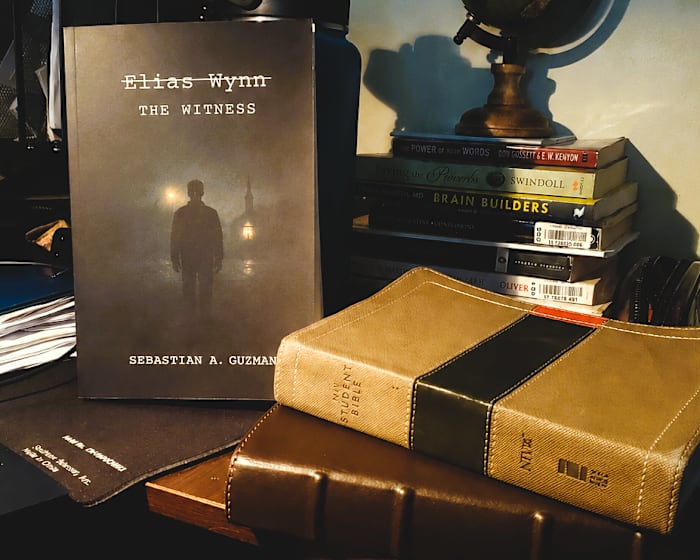
So here are 10 books I’d recommend to men during Men’s Health Month.
1. The Bible
I have to start here.
The Bible does not give men fake strength. It does not flatter us. It tells the truth.
You see men in Scripture fail, run, lie, fight, repent, lead, break down, get restored, and learn obedience the hard way.
That is real life.
The Bible shows that strength is not pretending you have no fear. Strength is obedience. Humility. Repentance. Sacrifice. Love. Endurance. Getting back up and going back to God again.
For any man who feels lost, tired, guilty, angry, or confused, start with the Gospel of John. Read the Psalms when you do not know what to pray. Read Proverbs slowly and let it check your habits.
You do not need to have everything together before you open it.
That is kind of the point.
2. Man’s Search for Meaning by Viktor E. Frankl
This is one of those books that reminds you how much the human spirit can endure.
It is not an easy book, but it is an important one.
A lot of men are quietly asking, “What is the point?”
What is the point of suffering?
What is the point of working hard?
What is the point of trying again when life keeps hitting you?
Frankl does not give cheap answers. He talks about meaning in the middle of suffering. That is something men need, because sometimes life does not get fixed quickly. Sometimes you have to find meaning while you are still in the middle of it.
3. The Screwtape Letters by C.S. Lewis
This book is smart, funny, uncomfortable, and convicting.
C.S. Lewis shows how temptation is not always loud and obvious. Sometimes it is distraction. Pride. Irritation. Laziness. Resentment. Numbness. The slow drift away from God.
That is how a lot of men get caught.
Not always in one big dramatic moment, but little by little.
This is a great book for a man who wants to understand his own spiritual blind spots without feeling like he is reading a textbook.
4. The Cost of Discipleship by Dietrich Bonhoeffer
This one is heavier, but it matters.
Bonhoeffer does not present Christianity like a motivational brand. He talks about obedience, sacrifice, grace, and what it actually costs to follow Jesus.
Men need that.
We do not need a faith that only works when life is easy. We need a faith that can survive pressure, temptation, loss, sickness, and disappointment.
This is the kind of book that will not just encourage you. It will challenge you.
Sometimes that is what we need.
5. Atomic Habits by James Clear
This is probably one of the most practical books on the list.
A man’s life is shaped by what he repeats.
What he watches.
What he eats.
How he sleeps.
How he talks to his wife.
How he handles stress.
Whether he prays.
Whether he moves his body.
Whether he tells the truth.
Whether he keeps promises when nobody is watching.
Atomic Habits is helpful because it does not make change feel impossible. It reminds you that small habits add up.
Sometimes you do not need to fix your whole life in one dramatic moment. Sometimes you just need to start with one faithful change and repeat it.
6. The War of Art by Steven Pressfield
This book is for the guy who knows he is supposed to do something but keeps avoiding it.
Write the book.
Start the business.
Go back to the gym.
Have the hard conversation.
Apologize.
Create something.
Finish what you started.
Pressfield calls the enemy “Resistance,” and every man knows what that feels like.
It is that voice that says, “Start tomorrow.”
Or, “Who do you think you are?”
Or, “You already failed before.”
This book is short, direct, and useful. It is not soft. It basically tells you to stop negotiating with fear and do the work.
A lot of men need that.
I know I do.
7. The Body Keeps the Score by Bessel van der Kolk
This book is heavy, so I would not tell everybody to rush into it casually.
But I do think a lot of men need to understand that trauma does not always look the way we think it looks.
Sometimes it looks like anger.
Sometimes it looks like shutting down.
Sometimes it looks like tension in your body.
Sometimes it looks like addiction.
Sometimes it looks like not being able to rest.
Sometimes it looks like feeling unsafe even when nothing is currently happening.
A lot of guys have been taught to “just move on,” but the body does not always move on just because we tell it to.
Healing is not weakness.
Avoiding the wound forever is not strength.
8. Wild at Heart by John Eldredge
I know people have different opinions on this book, and I get that.
But I still think there is something valuable here, especially for men who feel passive, numb, or disconnected from purpose.
At its best, this book reminds men that their hearts matter. That courage matters. That desire matters. That there is something in a man that wants a battle worth fighting and a life that actually means something.
Of course, read it with discernment. Bring everything back to Scripture.
But I do think men need to hear that masculinity is not the enemy.
Sin is the enemy.
Brokenness is the enemy.
Pride is the enemy.
But a man being healed, strengthened, disciplined, and submitted to God is a good thing.
9. The Road by Cormac McCarthy
This one is fiction, but I had to include it.
The Road is dark, quiet, brutal, and deeply emotional. At the center of it is a father and son trying to survive in a broken world.
It is not a “feel-good” book.
But it says something powerful about fatherhood, protection, endurance, and carrying hope when everything around you looks dead.
There is this idea in the book of “carrying the fire.”
That stuck with me.
Because that is what a good man is supposed to do.
Carry the fire.
Not burn everyone around him.
Not become cold.
Carry the fire.
10. Elias Wynn: The Witness by Sebastian A. Guzman

Yes, I’m putting my own book on this list.
I know that might sound biased, and it is. But I wrote this book from a place that connects directly to Men’s Health Month.
Elias Wynn: The Witness is a psychological thriller with supernatural horror, but underneath all of that, it is about suffering, sickness, fear, faith, trauma, healing, and the question of what happens when a desperate person is offered relief from the wrong source.
It is not a “men’s advice” book.
It is a story.
But sometimes stories get past defenses that advice cannot.
That is one reason I wrote it the way I did.
A lot of men do not want to be lectured. They do not want someone standing over them saying, “Talk about your feelings.” But they might follow a character. They might recognize fear in someone else before they can name it in themselves. They might see what silence, pain, hope, and spiritual pressure look like when it is happening to another person.
That is what fiction can do.
It can sneak truth through the side door.
And if there is one thing I hope men take from Elias’s story, it is this:
Not every healing is mercy.
Not every voice that offers relief is from God.
And even in the darkest places, you can still stay with the light.
Final Thoughts
I do not think men need more shame.
Most guys already have enough of that.
I do not think men need to be mocked into being healthier.
I do not think men need another person acting like they are stupid, emotionally broken, or automatically the problem.
But I do think men need truth.
We need God.
We need discipline.
We need brotherhood.
We need doctors.
We need rest.
We need repentance.
We need to take care of our bodies before they force us to pay attention.
We need to talk before silence turns into anger, addiction, bitterness, or despair.
And yes, sometimes we need books.
Not because books fix everything.
They do not.
But the right book can open a door.
The right book can make a man feel less alone.
The right book can give language to something he has carried for years.
So for Men’s Health Month, here is my simple encouragement:
Make the appointment.
Call the brother.
Open the Bible.
Go for the walk.
Tell the truth.
Read something that forms you.
And if Father’s Day was hard for you, do not pretend it was not.
God is not limited by the father you had, the father you lost, the father you never knew, or the father you are trying to become.
There is still healing.
There is still time.
There is still light.